Q: What do you 'think'? How did people of different classes 'think' differently?
A: Thinking is a very broad topic for a human to try and write about. It is also hard to think about thinking and the way you think. A person has an innate sense to think and how to think. Though they do not always realize, they think about things logically and use common sense. Think is defined as, “to have a conscious mind, to some extent of reasoning, remembering experiences, making rational decisions, etc,” (www.dictionary.com). This definition basically means that humans reason through things, remember things that they experienced, and make decisions based on their reasoning and experiences. It is also defined as, “to employ one's mind rationally and objectively in evaluating or dealing with a given situation,” (www.dictionary.com). This definition is saying that humans think rationally to deal with a situation. Both of these definitions are saying that humans think with common sense and knowledge of past experiences to deal with obstacles they may face now.'
People of different classes sometimes think very differently and sometimes think the same way. Humans from the Middle Ages were set into strict social classes. There were knights, merchants, clergy, and peasants. The knights and other higher classes may have thought that farming was a sign of poor, oppressed people, while the farmers had no shame in it. The peasants may have thought that the knights and other higher classes were conceited, arrogant, and thought little of the peasants. Some of these accusations were true, while some were false. The government had a large role in the social classes along with money and family. The noble men owned their own land, while the peasants lived on the lord’s land. This visibly set them apart. The noble men looked down upon the peasants, and the peasants were taught to look up to the noble men. Each lord had a small army made up of vassals who owed him military service for their fiefs. A vassal is the weaker man and the lord is the stronger man. A fief is “usually a piece of land, although sometimes it was a right, such as the right to fish in a stream or the right to collect a toll on a certain road; a vassal could become a lord himself if he granted a piece of his fief to another man,” (http://www.mnsu.edu/emuseum/history/middleages/feudal.html). When lords made laws they used their army to enforce it. The lord was also the judge and if his vassals had trouble with one another, than the vassals could go to the lord and have the lord settle the trouble. Some peasants were freemen, but most peasants were serfs. Freemen were peasants who could “move from place to place if they did not like their master,” (http://www.mnsu.edu/emuseum/history/middlea ges/feudal.html). Serfs “belonged to the land and could not move off of it. They also could not be removed from it by their lord,” (http://www.mnsu.edu/emuseum/history/middlea ges/feudal.html). Children who were born to noble men enjoyed all of the luxuries of the time. They could also become earls, barons, and knights. Children born to peasants were likely to live at the same place their whole lives and do the same job that their parents did. Every person in the Middle Ages was a Roman Catholic, except for the few Jews. The kings all the way to the serfs were affected by religion. The Church collected taxes and gifts such as land, crops, and even serfs. This would ensure a spot in heaven and made the Church very powerful. The Church could then influence the kings and noble men. This would make the Church even more powerful. The people of the Middle Ages were in strict social classes and could not move from one class to another.
Friday, April 30, 2010

What was the 12th Century Renaissance?
The Twelfth Century Renaissance was a time of social, political, and economic transformations. It was also cited as the rebirth of Western Europe. It strengthened scientific and philosophical roots. These strengthened roots paved the way for achievements like the Italian Renaissance in the Fifteenth Century. There was a literary and artistic movement in the Fifteenth Century also. They paved the way for scientific developments in the Seventeenth Century. The Twelfth Century Renaissance effected the future very much, and will continue to effect the world.
Tuesday, April 27, 2010
Animoto
http://animoto.com/play/71BdmV7pDhUZLZZTaA9Frw?autostart=true - Religion
http://animoto.com/play/8es4k1AVSankF35DHc2HcQ?autostart=true - Social Class
http://animoto.com/play/fUARhNMsDXcUmuSHfJ3pWw?autostart=true - The Black Death
http://animoto.com/play/8es4k1AVSankF35DHc2HcQ?autostart=true - Social Class
http://animoto.com/play/fUARhNMsDXcUmuSHfJ3pWw?autostart=true - The Black Death
Friday, April 23, 2010
The Deadly Plague
It was 2052 in the small town of Riverside Gennevia, previously known as North Carolina, and there was a group of students who had just visited the ancient ruins of the Victorian Era in New York; now Victoria, named for its ruins. There were two friends, Morgan and Emma. They had only been back at Riverside High for a week when Morgan started to get swine flu. Swine flu spread quickly in 2009, but now it was just another common cold. Morgan only had to stay home from school for one day to recover.
The next day I woke up itching all over. “I already had chicken pox, so it couldn’t be that,” I thought. “Mom, come here for a minute,” I said through the intercom. Within minutes her mom was at my side, “What’s wrong, Morgan?” “I’m itching all over!” I complained. “We’ll have it checked out by a doctor tomorrow,” she said and abruptly left.
I decided to call Emma to get my work. “Hey, Emma.” “Hey, why weren’t you in school?” she asked. “I’m still not feeling well. Can you send me the notes from science and bring some books to my house?” “Sure, I’ll e-mail them now,” she said. After school that day Emma dropped off my books and helped me with our science homework. That night I woke up with purple spots all over my body, and the itching had gotten worse. I was rushed to the emergency room. That night Morgan died from the illness.
The wind was blowing hard on my back as I reached the table where almost all of my friends were. “Hey, guys, did you hear about Morgan?” I asked. “The whole town did, Emma,” Rae replied. “I can’t believe she’s gone,” Nicole said. Just then one of the mathletes, Chioma, came up to them, “Hey guys, I heard about Morgan. I’m really sorry.” “Thanks, Chioma,” Kaylee said sadly. Later, two of our friends, Shannon and Carol, passed by and said, “Hey guys, there’s going to be a memorial in band today for Morgan. You should come.” “Alright, we will,” Nicole said.
Right before Morgan’s memorial I became very sick and was sent home. Rae brought me my schoolwork. “I hope you feel better,” she said. “Thanks,” I coughed out. I woke up later that night, feeling like my body was on fire. I was rushed to the emergency room and, luckily, they were able to make the burning stop. A couple days later I got a call from my friend, Joey. “Hey, how are you?” he asked. “Better than the other night,” I joked. “Good,” he chuckled, “Did you know Rae is sick?” “No,” I said, shocked, “What does she have?” “It’s just a cold, but she’s been out of school for a couple of days,” he answered. “Oh, I hope she gets better,” I said. “Yeah, me too. Well, I’ll see you when you come back.” “Bye,” I said. The next day I woke up with purple spots all over my body.
Three days later Emma died. She fought hard, her body burning and itching. She was covered in purple spots and could barely breathe. She looked like she had been bruised all over her body. The illness spread throughout the country, killing half of the population, before finally slowing and finding ways to prevent the deadly plague.
The next day I woke up itching all over. “I already had chicken pox, so it couldn’t be that,” I thought. “Mom, come here for a minute,” I said through the intercom. Within minutes her mom was at my side, “What’s wrong, Morgan?” “I’m itching all over!” I complained. “We’ll have it checked out by a doctor tomorrow,” she said and abruptly left.
I decided to call Emma to get my work. “Hey, Emma.” “Hey, why weren’t you in school?” she asked. “I’m still not feeling well. Can you send me the notes from science and bring some books to my house?” “Sure, I’ll e-mail them now,” she said. After school that day Emma dropped off my books and helped me with our science homework. That night I woke up with purple spots all over my body, and the itching had gotten worse. I was rushed to the emergency room. That night Morgan died from the illness.
The wind was blowing hard on my back as I reached the table where almost all of my friends were. “Hey, guys, did you hear about Morgan?” I asked. “The whole town did, Emma,” Rae replied. “I can’t believe she’s gone,” Nicole said. Just then one of the mathletes, Chioma, came up to them, “Hey guys, I heard about Morgan. I’m really sorry.” “Thanks, Chioma,” Kaylee said sadly. Later, two of our friends, Shannon and Carol, passed by and said, “Hey guys, there’s going to be a memorial in band today for Morgan. You should come.” “Alright, we will,” Nicole said.
Right before Morgan’s memorial I became very sick and was sent home. Rae brought me my schoolwork. “I hope you feel better,” she said. “Thanks,” I coughed out. I woke up later that night, feeling like my body was on fire. I was rushed to the emergency room and, luckily, they were able to make the burning stop. A couple days later I got a call from my friend, Joey. “Hey, how are you?” he asked. “Better than the other night,” I joked. “Good,” he chuckled, “Did you know Rae is sick?” “No,” I said, shocked, “What does she have?” “It’s just a cold, but she’s been out of school for a couple of days,” he answered. “Oh, I hope she gets better,” I said. “Yeah, me too. Well, I’ll see you when you come back.” “Bye,” I said. The next day I woke up with purple spots all over my body.
Three days later Emma died. She fought hard, her body burning and itching. She was covered in purple spots and could barely breathe. She looked like she had been bruised all over her body. The illness spread throughout the country, killing half of the population, before finally slowing and finding ways to prevent the deadly plague.
Monday, April 19, 2010
The Church and the Monasteries (Revised)
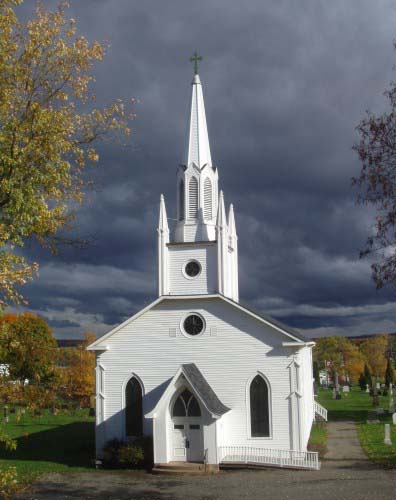
Christianity had spread rapidly throughout Europe, which caused the Church and Monasteries to become the centers of learning during the Middle Ages. Anyone with a human soul was to be taught and was to live the life of Christianity. Christianity was forced upon some people who did not want to practice that faith. By doing this they gained power. By this power the Church gained, it became the center of learning. The Church at this time was economically stable, they made laws and set up courts to uphold these laws and the priest and monks were the only people who could read and write. At this time people were questioning things that happened in everyday life and Christianity helped them feel as if something they knew and breathed was set and stone. The fear of the unknown caused Christians to believe in the Church even more.
Picture from: http://jahdai.files.wordpress.com/2009/04/church.jpg
"History of Christianity/Medieval Christianity/Development of the Medieval Church - Wikibooks, Collection of Open-content Textbooks." Main Page - Wikibooks, Collection of Open-content Textbooks. Web. 14 Apr. 2010
CBS News

CBS News is a good web site to go to for recent history because it is well-known and trusted. It also has the best explanations and summaries of events. CBS is also very accurate with their information. It is very informative and easy to navigate. There are also blogs and shows to read and watch. It is updated daily and has very good information. CBS is a very important news site because it has a lot of information before other web sites. It can help a person stay in touch with what happened and is happening with the world.
Picture from: http://www.ripfestfilmproject.com/images/newslogos/CBS_News_Logo.jpg
Do human beings have an innate instinct to be free?
Humans do have the instinct to be free. They feel the need to be their own person and live the way they want to. Some people, however, do not get this chance. Many people do not get the freedom of religion and speech, like we do in America. There are different levels of freedom. There is the freedom to believe what you want to, the freedom to be the person you chose to be, and the freedom to live the way you chose to live. The government does not give a person freedom, but they can take it away or protect it. Freedom is an important part of every person’s life and should not be taken for granted.
Wednesday, April 14, 2010
How was the medieval concept of power and equality different from our contemporary concept?

The medieval concept of power and equality was different than it is today because they did not have equality like we do now. The medieval concept of equality was what class you were born into was the class you stayed in throughout your life. If you were a serf you would not be able to earn more money and become rich. Now, we have social mobility. This means that you can change your social status; poor can become rich and rich can become poor. Most of the power was held by the Church, unlike now, where the power is held by the government. The medieval concept and the modern concept are extremely different and the future concept will be different also.
Picture:http://www.ashokascales.com/scales1.png
Why do you think the Church and the monasteries became the centers of learning?

The Church and the monasteries became the centers of learning because the only people who knew how to write and read were living in the monasteries. The people who could read and write were very important, because they had skills that the average person could never hope to achieve. If a person could read and write, they would most likely live in a monastery and copy books by hand. Many leaders were also from the Church. Another reason the Church had become so powerful was the fact that they made laws and set up courts to uphold the laws. The Church was able to become the center of learning because it was economically stable.
Info: http://www.directessays.com/viewpaper/87919.html
Picture: http://www.faithandgeekery.com/wp-content/uploads/2009/06/english-church.jpg
Subscribe to:
Comments (Atom)